Free Demo


For most IT certification candidates, passing CompTIA prep4sure exam is long and hard work. CompTIA Cloud+ Certification Exam vce dumps need much time and energy to prepare and practice. So if you want to pass actual test quickly at first attempt, choosing valid CompTIA Cloud+ Certification Exam prep4sure dumps is very important. Our website pledges to customers that we can help candidates 100% pass CompTIA Cloud Essentials prep4sure exam. You just need to spend one or two days to practice CompTIA Cloud+ Certification Exam vce dumps and review study guide, passing exam will be easy. Once select our CompTIA Cloud+ Certification Exam test dumps, you will not only save time and money, but also help you pass test successfully. Choosing CompTIA prep4sure pdf means choosing success.

Instant Download: Upon successful payment, Our systems will automatically send the product you have purchased to your mailbox by email. (If not received within 12 hours, please contact us. Note: don't forget to check your spam.)
Our website is the most reliable backing for every candidate who is going to attend CompTIA Cloud+ Certification Exam vce dumps. All study materials required in CompTIA Cloud+ Certification Exam dumps torrent is provided by our website can overcome the difficulty of the actual test. Once you purchased our CV0-001 free dumps as your study materials, we will try our best to help you pass CompTIA Cloud+ Certification Exam prep4sure pdf. Besides, you will have right to free update your CompTIA Cloud+ Certification Exam test dumps one-year after you purchased.
Our senior IT experts have developed questions and answers about CompTIA Cloud+ Certification Exam prep4sure dumps with their professional knowledge and experience, which have 90% similarity to the real CompTIA Cloud+ Certification Exam pdf vce. What's more, we always check the updating of CV0-001 test dumps to ensure the accuracy of questions and answers. Before you decide to buy, you can download the demo of CompTIA Cloud+ Certification Exam free dumps to learn about our products. I believe you will get high score in the test with our CompTIA Cloud+ Certification Exam prep4sure dumps.
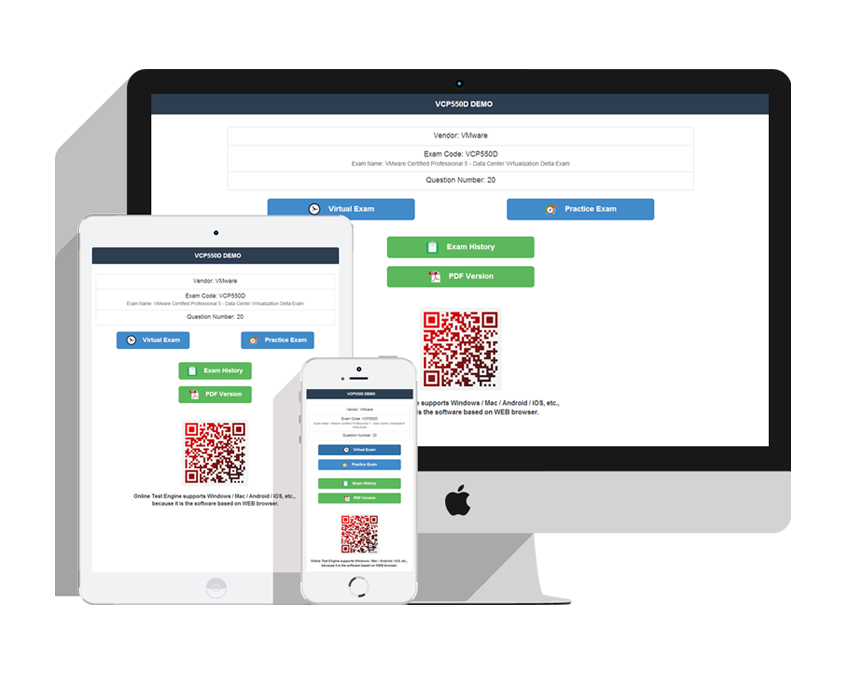
Our CompTIA Cloud+ Certification Exam free dumps can not only save time and money, but also help you pass CV0-001 prep4sure exam with high pass rate. It will just take one or two days to practice our CompTIA Cloud+ Certification Exam prep4sure pdf and remember the test answers. And you can review test questions of CompTIA Cloud+ Certification Exam test dumps anywhere and anytime with the help of our online test engine, which can bring you new experience about the actual test.
After choose CompTIA Cloud+ Certification Exam vce dumps, you can get the latest edition of test questions and answers. The accuracy rate of our CompTIA Cloud+ Certification Exam prep4sure dumps can ensure you pass real exam smoothly. If you failed the exam with our CompTIA Cloud+ Certification Exam pdf vce, we promise you full refund. And we offer 24/7 customer assisting, please feel free to contact us if you have any questions.
CompTIA Cloud+ Exam Certification Details:
| Sample Questions | CompTIA Cloud+ Sample Questions |
| Schedule Exam | CompTIA Marketplace |
| Exam Price | $294 (USD) |
| Passing Score | 750 / 900 |
| Books / Training | CompTIA Cloud+ CV0-001 |
| Duration | 90 mins |
| Exam Name | CompTIA Cloud+ |
| Exam Code | CV0-001 |
| Number of Questions | 100 |
Reference: https://certification.comptia.org/certifications/cloud
CompTIA CV0-001 Exam Syllabus Topics:
| Topic | Details |
|---|---|
| Cloud Concepts and Models 12% | |
| Compare and contrast cloud services. | 1. SaaS (according to NIST)2.IaaS (according to NIST) 3.PaaS (according to NIST) 4.CaaS 5.XaaS 6. DaaS 7.BPaaS 8. Accountability and responsibility based on service models |
| Compare and contrast cloud delivery models and services. | 1. Private2. Public 3. Hybrid 4. Community 5. On-premise vs. off-premise hosting 6. Accountability and responsibility based on delivery models 7.Security differences between models
9. Orchestration platforms |
| Summarize cloud characteristics and terms. | 1. Elasticity2. On-demand self-service/just-in-time service 3. Pay-as-you-grow 4. Chargeback 5. Ubiquitous access 6. Metering resource pooling 7. Multi-tenancy 8. Cloud bursting 9. Rapid deployment 10. Automation |
| Explain object storage concepts. | 1. Object ID2. Metadata 3. Data/blob 4. Extended metadata 5. Policies 6. Replicas 7. Access control |
| Virtualization 19% | |
| Explain the differences between hypervisor types. | 1.Type I and Type II
3.Consumer vs. enterprise use
|
| Install, configure and manage virtual machines and devices. | 1. Creating, importing and exporting template and virtual machines 2.Install guest tools
4.Image backups vs. file backups 5.Virtual NIC
|
| Given a scenario, perform virtual resource migration. | 1. Establish requirements2. Maintenance scheduling 3. Reasons
6. Physical to Virtual (P2V) 7. Virtual to Virtual (V2V) 8. Virtual to Physical (V2P) |
| Explain the benefits of virtualization in a cloud environment. | 1. Shared resources2. Elasticity
4. Infrastructure consolidation 5. Virtual datacenter creation |
| Compare and contrast virtual components used to construct a cloud environment. | 1.Virtual network components
3. Virtual CPU 4.Storage virtualization
|
| Infrastructure 21% | |
| Compare and contrast various storage technologies. | 1.Network Attached Storage (NAS)
|
| Explain storage configuration concepts. | 1.Disk types
|
| Execute storage provisioning. | 1. Creating LUNs2. Creating network shares 3. Zoning and LUN masking 4.Multipathing 5. Implications of adding capacity to a NAS and SAN
|
| Given a scenario, implement appropriate network configurations. | 1.NAT 2. PAT3.Subnetting/supernetting 4.VLAN and VLAN tagging 5. Network port configurations 6. Switching and routing in physical and virtual environments
|
| Explain the importance of network optimization. | 1. WAN2. LAN 3. MAN 4. QoS 5. Bandwidth 6. Latency 7. Compression 8. Caching 9. Load balancing 10. Devices on the same subnet |
| Given a scenario, troubleshoot basic network connectivity issues. | 1.Tools
3. Review system logs |
| Explain common network protocols, ports and topologies. | 1. Trunk ports2. Port binding/aggregation 3. Common ports
|
| Explain common hardware resources and features used to enable virtual environments. | 1. BIOS/firmware configurations2. Minimum memory capacity and configuration 3. Number of CPUs 4. Number of cores 5.NICs quantity, speeds and configurations 6. Internal hardware compatibility 7. HBAs 8. Storage media
|
| Resource Management 13% | |
| Given a scenario, implement and use proper resource monitoring techniques. | 1.Protocols
4. Automated responses to specific events 5. Examine processes usage/resource usage |
| Given a scenario, appropriately allocate physical (host) resources using best practices. | 1. Memory2. CPU 3. Storage and network allocation 4. Entitlement/quotas (shares)
6. Licensing 7. Resource pooling |
| Given a scenario, appropriately allocate virtual (guest) resources using best practices. | 1. Virtual CPU2. Memory 3. Storage and network allocation 4. Entitlement/quotas (shares) 5. Hard limit/soft limit 6. Reservations/licensing 7. Dynamic resource allocation 8. Resource pooling 9. CPU affinity 10. Physical resource redirection and mapping to virtual resources
|
| Given a scenario, use appropriate tools for remote access. | 1. Remote hypervisor access2. RDP 3. SSH 4.Console port 5.HTTP |
| Security 16% | |
| Explain network security concepts, tools and best practices. | 1. ACLs2.VPNs 3. IDS/IPS hardware/ software-based firewalls 4. DMZ 5. Review/audit logs 6.Attacks
|
| Explain storage security concepts, methods and best practices. | 1. Obfuscation2. Access control lists 3. Zoning 4. LUN masking 5. User and host authentication 6. Review/audit logs |
| Compare and contrast different encryption technologies and methods. | 1. PKI2.IPSec 3. SSL/TLS 4.Ciphers
|
| Identify access control methods. | 1. Role-based administration2. Mandatory access controls 3. Discretionary access controls 4. Multifactor authentication 5. Single sign-on 6. Federation |
| Implement guest and host hardening techniques. | 1. Disabling unneeded ports and services2. User credentials
4. Antivirus software 5. Patching 6.Deactivating default accounts |
| Systems Management 11% | |
| Explain policies and procedures as they relate to a cloud environment. | 1. Network and IP planning/documentation2. Configuration standardization and documentation 3. Change management best practices
7. Maintenance windows
|
| Given a scenario, diagnose, remediate and optimize physical host performance. | 1.Disk performance 2. Disk tuning3. Disk latency 4. Swap disk space 5. I/O tuning 6. Performance management and monitoring tools 7. Establish baseline and create documentation with appropriate tools 8.Hypervisor configuration best practices
10.Common issues
|
| Explain common performance concepts as they relate to the host and the guest. | 1. IOPS2. Read vs. write files 3. File system performance 4. Metadata performance 5. Caching 6. Bandwidth 7. Throughput (bonding/teaming) 8. Jumbo frames 9. Network latency 10. Hop counts 11. QoS 12.Multipathing 13. Load balancing 14. Scaling
|
| Implement appropriate testing techniques when deploying cloud services. | 1. Test replication2. Test latency 3. Test bandwidth 4. Test load balancing 5. Test application servers 6. Test storage 7. Test application delivery 8. Service performance testing and application performance testing 9. Penetration testing 10. Vulnerability assessment 11. Separation of duties during testing |
| Business Continuity in the Cloud 8% | |
| Compare and contrast disaster recovery methods and concepts. | 1.Redundancy 2.Failover 3.Geographical diversity 4.Failback 5.Replication 6.Site mirroring 7.Hot site 8.Cold site 9.Warm site 10.Backup and recovery 11. Archiving and off-site storage 12.Replication types
14. RPO 15.MTBF 16.MTTR 17. Mission-critical requirements |
| Deploy solutions to meet availability requirements. | 1.Fault tolerance
3. Load balancing |